Every promise measured, in the hours it was made for
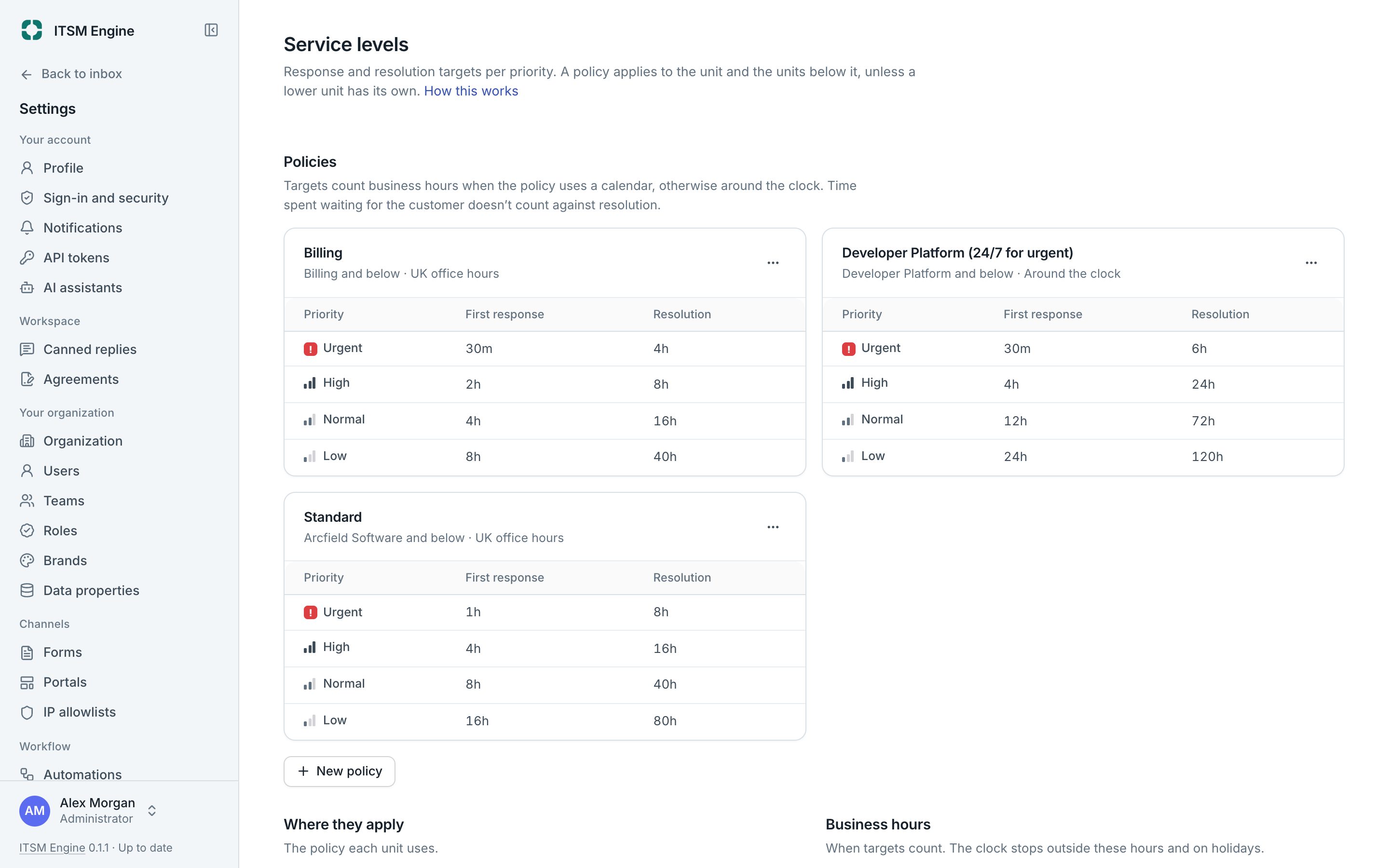
A service level agreement is a set of targets per priority: first response, next response and resolution. The desk picks the right one for each case, counts it in the right hours, warns before a target is missed and keeps the evidence.
How it works
Define an SLA once, such as Standard, Priority or 24/7 Critical, and use it wherever it applies: the organization default, a unit and the units below it, a service, or an account, for all its services or one, from a start date with a contract reference. One SLA applies to each case, by a fixed order, and overlaps are refused when you save. Why this one? on the case says how it was chosen.
Targets count in business hours with holiday calendars, which can be imported as .ics, and pause while the desk waits for the requester. Regions give worldwide units and accounts their own time zone and hours, so a case is measured in the hours of the people it is for.
Every change to an SLA is a new version. New cases use the latest, and open ones only when you say so, so a case keeps the targets it was promised. A warning goes out at 75% of a target by default, every breach is recorded with its reason, and the Service levels report shows them by SLA, account, unit, team, priority and month.
Operational level agreements set targets for the teams inside: how soon a team picks up a case and hands it back. With the ITSM add-on, supplier contracts sit beside them, and availability is measured per service and month.
What it includes
SLAs where they apply
The organization default, units, services and accounts, one per case by a fixed order.
First, next and resolution
Targets per priority, in hours or in business days.
Business hours and holidays
Opening hours in a time zone, holiday calendars defined once and imported as .ics.
Regions
A time zone and hours for units and accounts around the world.
Versions
Open cases keep their targets unless you apply a change to them too.
Warnings and breaches
A warning before the target, a breach recorded with its reason, by email and webhook.
OLAs per team
Pick up and hand back targets for each team that holds a case.
Reports and evidence
Service levels by SLA, account, unit, team and month, and every measurement as audit evidence.