Routine work happens by itself, and nothing waits too long
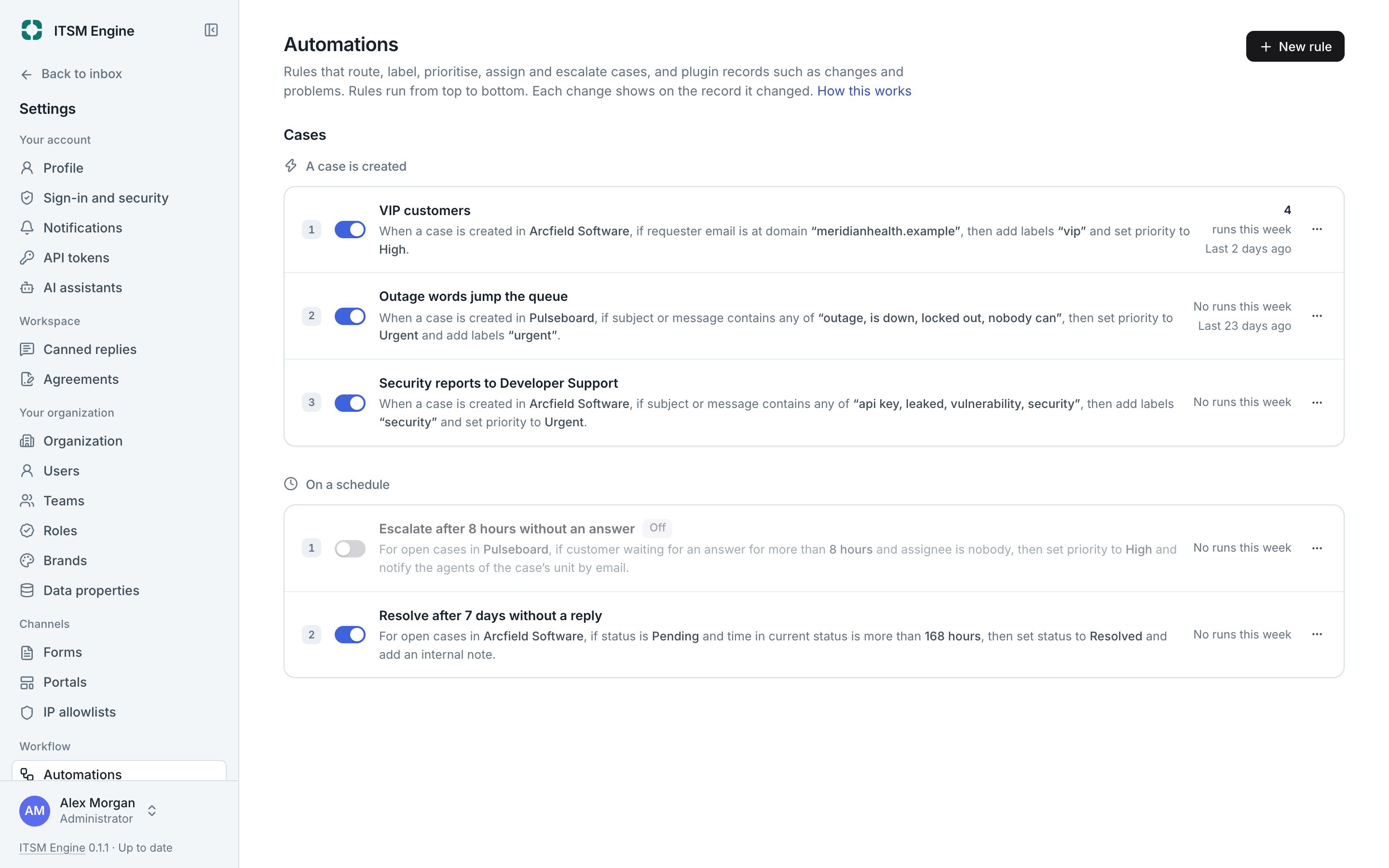
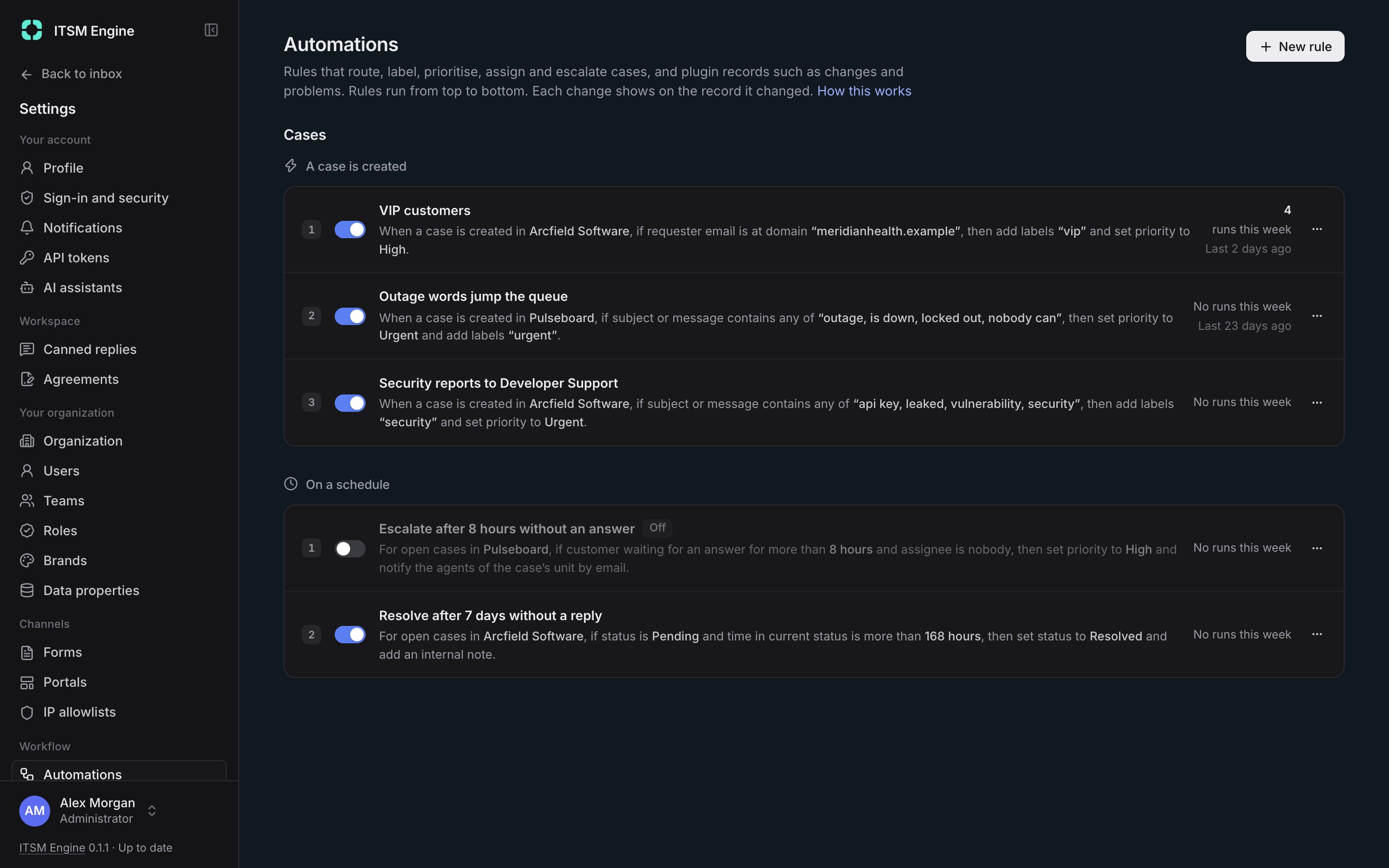
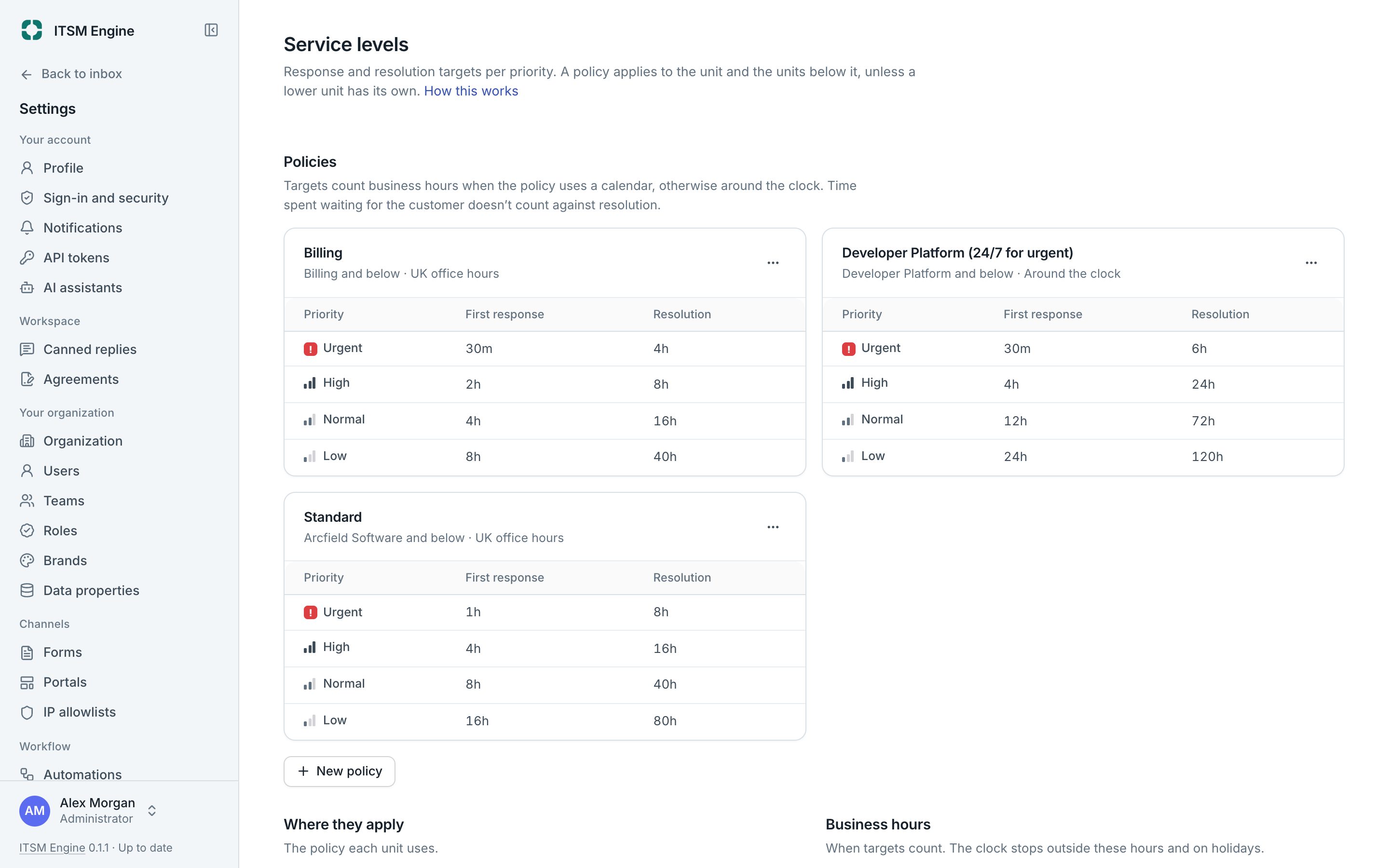
Automations are rules per unit that read as sentences: when something happens, if it matches, then act. Service levels put first-response and resolution due times on every case.
How it works
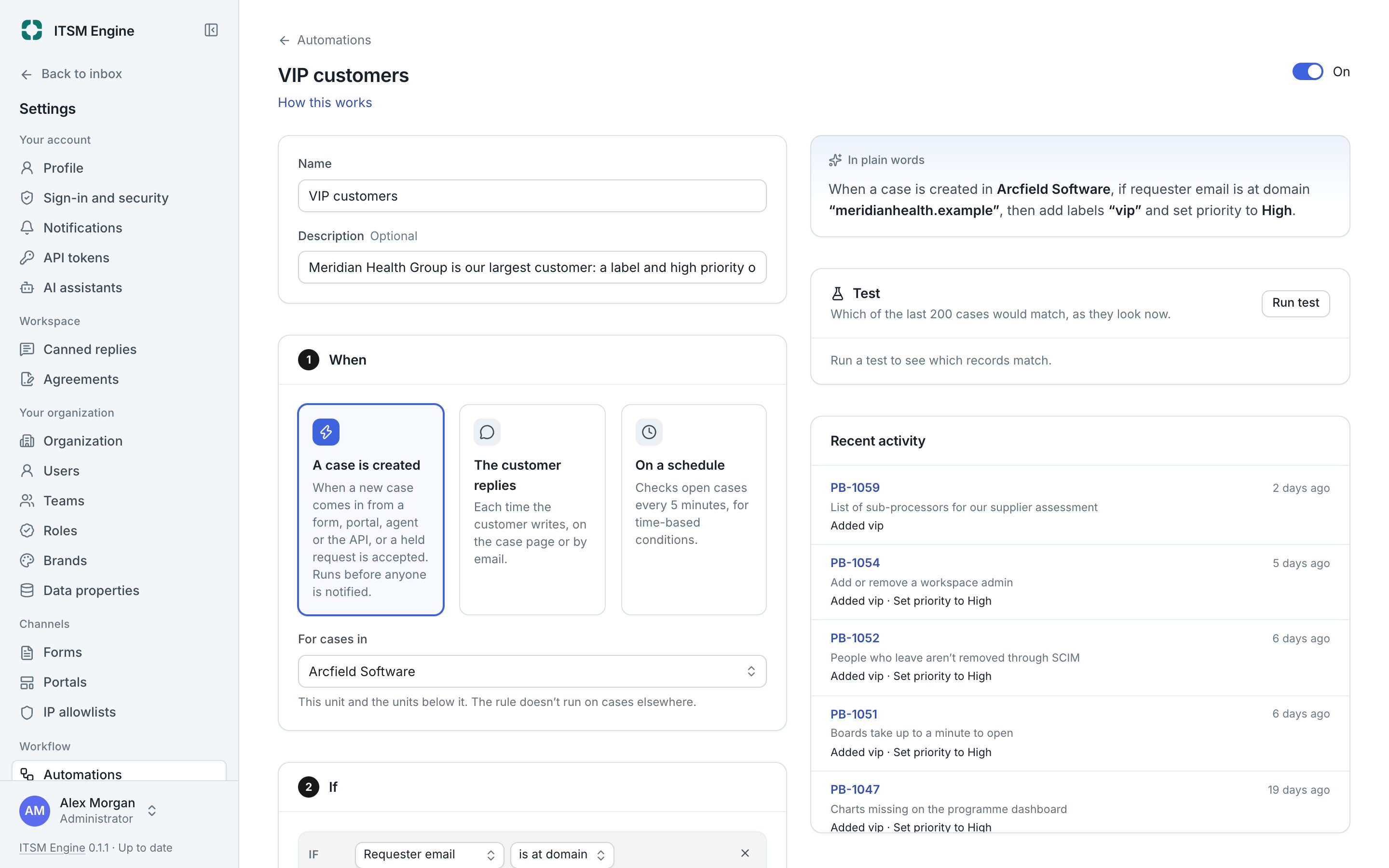
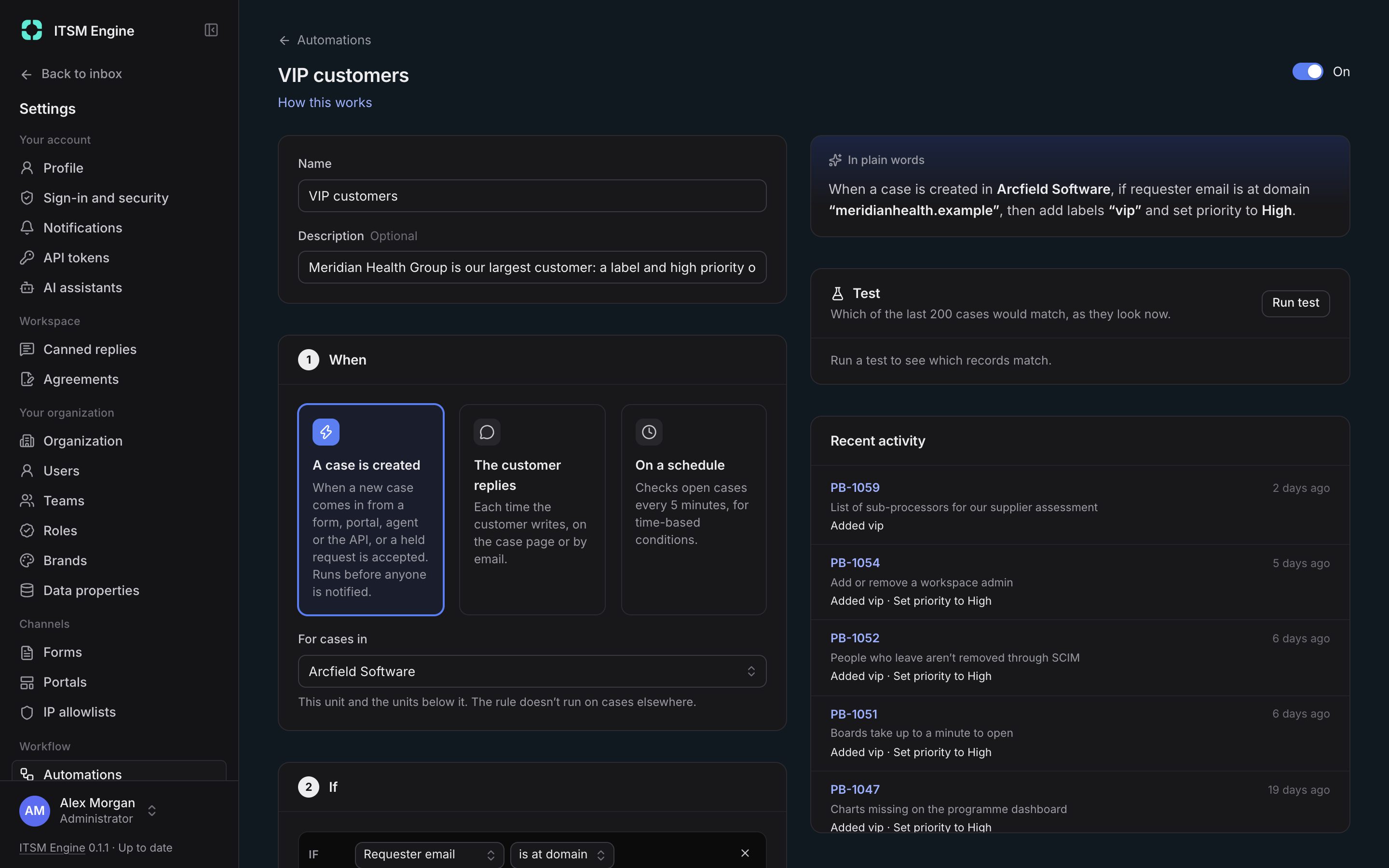
A rule runs when a case is created, when the customer replies, or on a schedule every five minutes. It checks up to 20 conditions, all or any of them, and runs its actions in order. Stop here ends the run for that case. While you build a rule, In plain words reads it back as one sentence.
Run test shows which cases match now without changing anything, and Recent activity shows the last runs with what each did, or why it didn’t. Rules can be ordered, turned off, duplicated and started from suggestions grouped by task.
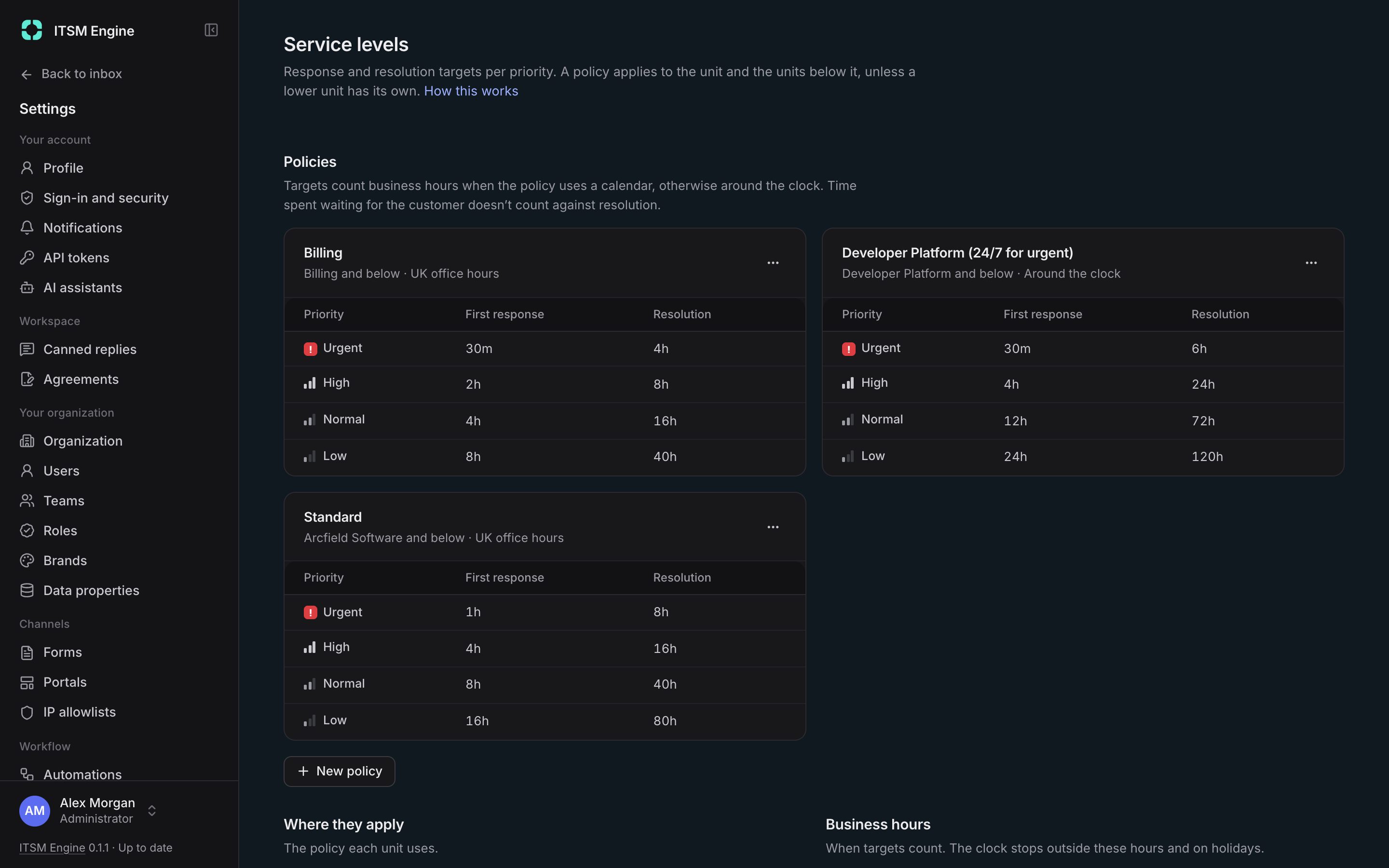
Service level policies apply to a unit and the units below it, with targets per priority. Targets can count business hours in a time zone, with holidays, and pause while the desk waits for the requester. Agents see due chips and the Due soon view, and scheduled rules can escalate before a target is missed.
With Change or Problem Management on, rules can also run on changes and problems.
What it includes
Triggers
A case is created, the customer replies, or on a schedule with a time condition.
Conditions
Unit, channel, form, priority, status, labels, assignee, requester, account, words in the subject or message, form fields, services and your own properties.
Actions
Set priority or status, add labels, assign to a person, round robin or least busy, put in a team queue, move to a unit, add a note or send an email.
Time conditions
Time since created, customer waiting, time in a status, and a target due soon or overdue.
Run test and history
See what a rule would match before turning it on, and what it did afterwards.
Service level policies
First response and resolution per priority, inherited down the unit tree.
Business hours
Opening hours in a time zone with daylight saving and holidays.
Paused while waiting
The clock stops while a case waits for the requester.